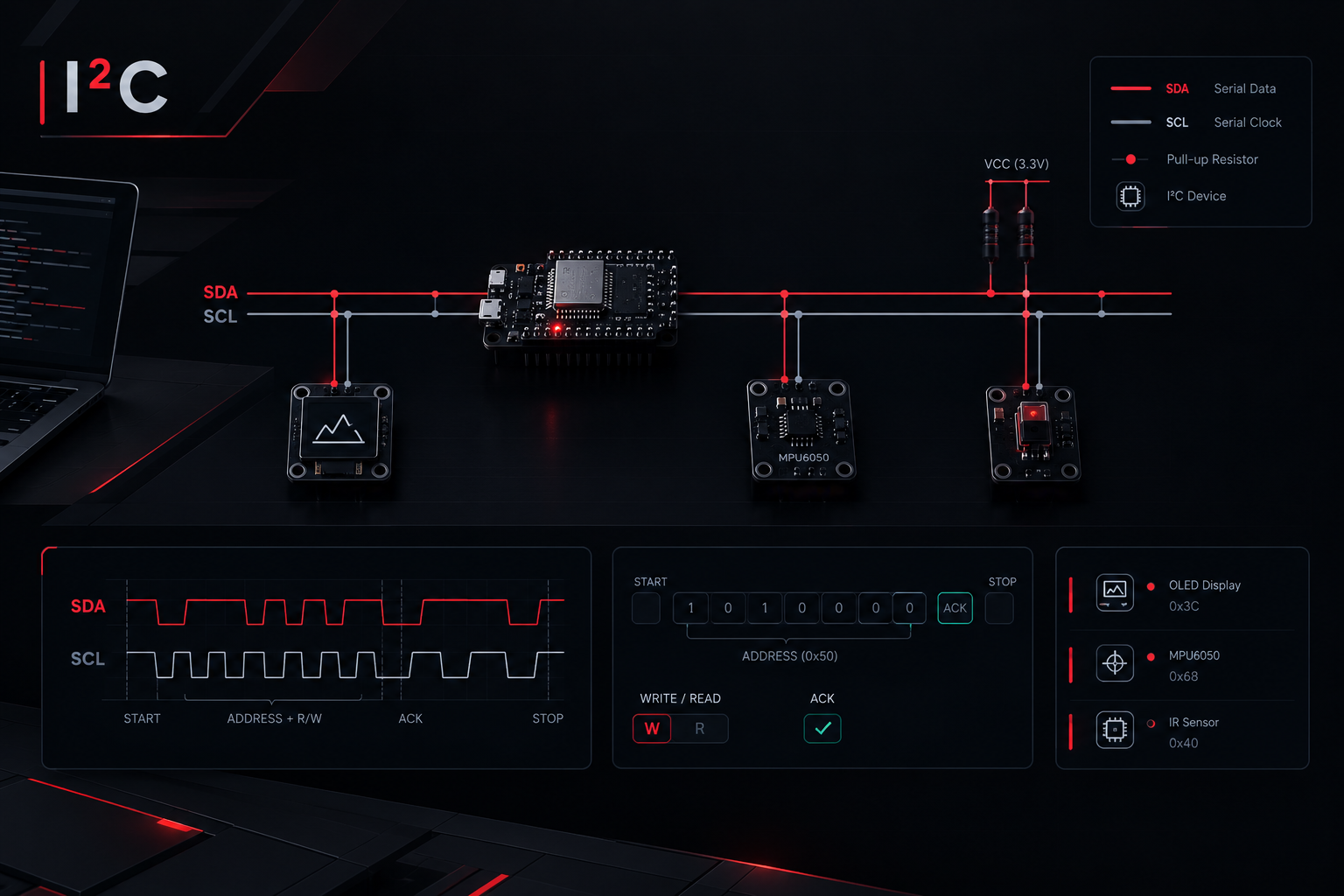
 DIGITAL ELECTRONICS01 / BUS PROTOCOLS
I²C Protocol Lab
Learn how SDA and SCL work by recreating a bus transaction. Generate a slave address, control the lines, and compare your waveform with the reference.
Explore interactive mini-games that turn complex engineering ideas into experiments you can see, test, and understand. No setup. No account. Just curiosity and hands-on learning.
Each lab is a small, self-contained experience built around one core concept. Change an input, observe the result, make a prediction, and try again. These are interactive simulations—not just videos or static tutorials.
Choose a lab and start experimenting.
DIGITAL ELECTRONICS01 / BUS PROTOCOLSLearn how SDA and SCL work by recreating a bus transaction. Generate a slave address, control the lines, and compare your waveform with the reference.
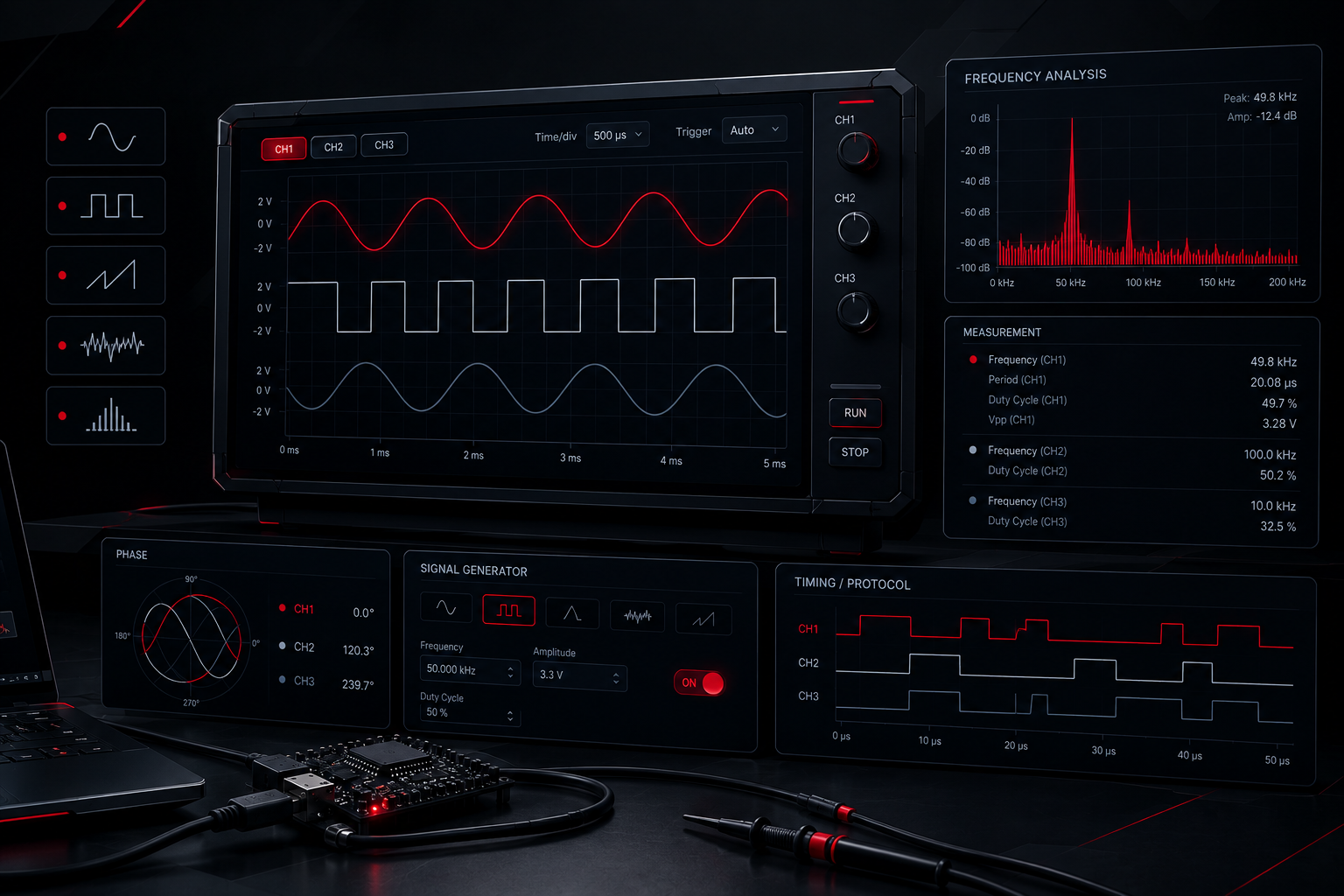 SIGNAL ANALYSIS02 / READ THE SIGNAL
Inspect digital waveforms, count edges, estimate frequency and duty cycle, and identify patterns like clocks, PWM, and bursts.
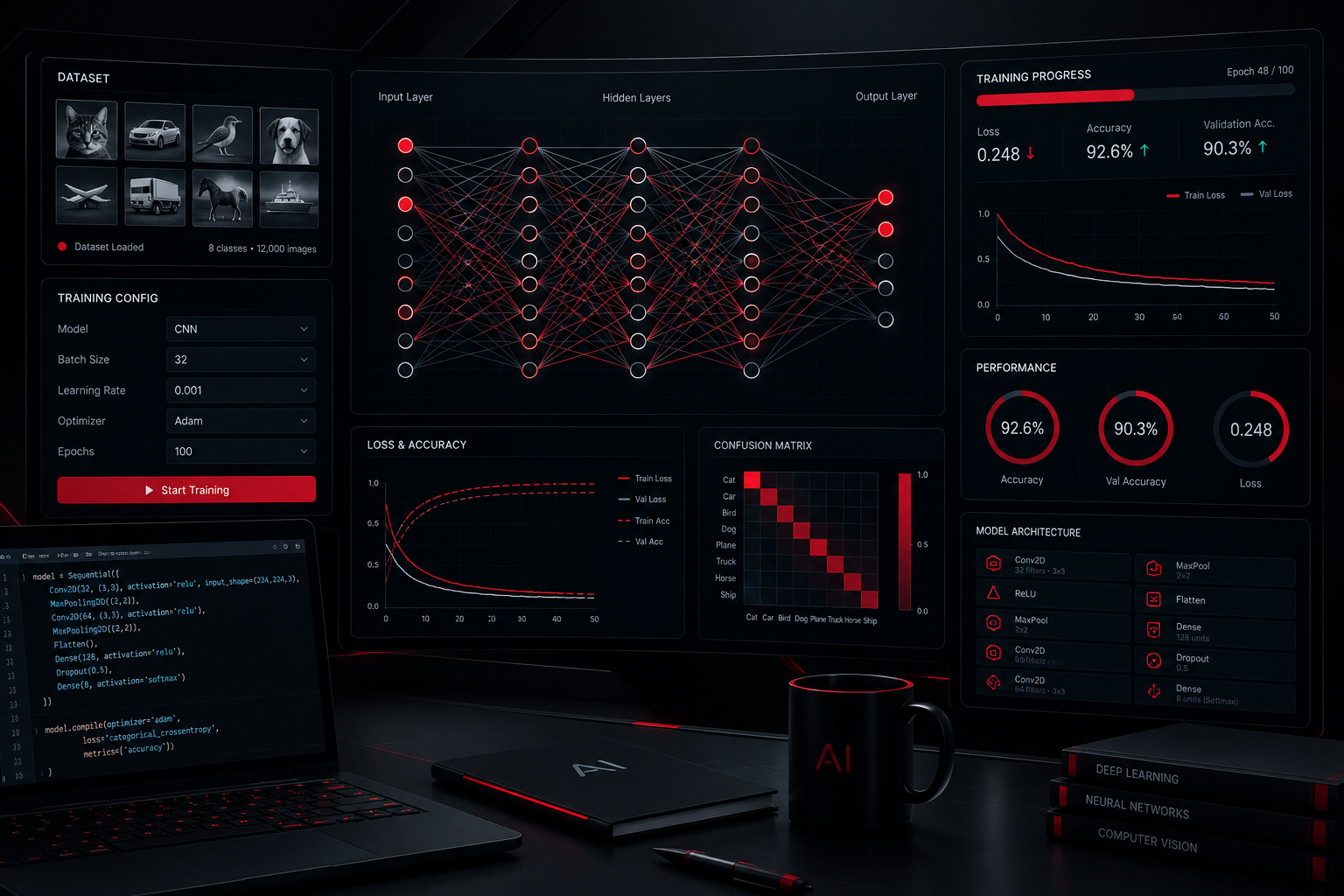 ARTIFICIAL INTELLIGENCE03 / TRAIN THE AI
Train a small neural network using real forward propagation, backpropagation, and gradient descent. Explore weights, biases, loss, and predictions.
Start with signals, move into protocols, then explore learning systems.
Change something. Observe what happens. Understand why.